Soldiers, Heroes, Faith and Identity
 |
| Normandy, France 8 March 2012 / Geoff Sutton |
1. War Memorials
offer the living evidence that another human being lived and died.
And in that war, that person made a significant contribution to us -- the one living and able to observe the memorial. Even when not connected by a family tree, we feel connected to someone who helped preserve our nation.
And in that war, that person made a significant contribution to us -- the one living and able to observe the memorial. Even when not connected by a family tree, we feel connected to someone who helped preserve our nation.
2. Memorials
reveal identities.
But the identities are often limited to a name and a date. Somehow a name is such a vital part of who we are. Some people get pretty upset when their names are mispronounced. What’s in a name? A lot really-- an entire life can be called up by a name. And we care for those unnamed—a place reserved in time and space for the “Unknown.” Sometimes we get a glimpse into another piece of identity. My father-in-law was a World War II American Veteran. There's a symbol representing his military service, wheat identifying his farmer-life, and a fish in memory of a favorite pasttime.
But the identities are often limited to a name and a date. Somehow a name is such a vital part of who we are. Some people get pretty upset when their names are mispronounced. What’s in a name? A lot really-- an entire life can be called up by a name. And we care for those unnamed—a place reserved in time and space for the “Unknown.” Sometimes we get a glimpse into another piece of identity. My father-in-law was a World War II American Veteran. There's a symbol representing his military service, wheat identifying his farmer-life, and a fish in memory of a favorite pasttime.
3. Memorials seem
eternal.
Memorials to fallen leaders or major national events – including wars—are made of hard rock and steel-- materials that outlast many lifetimes. No one wants to be forgotten. And those who helped form or protect a nation remind us of our identity. We human beings are social beings. We connect to our families, neighbors, nations, and faiths. And we fight for both. Memorials represent our values and we want those values to last. People want eternal life. Memorials helps us manage the fear of death and hint that something durable about us may outlast our fragile existence on earth.
Memorials to fallen leaders or major national events – including wars—are made of hard rock and steel-- materials that outlast many lifetimes. No one wants to be forgotten. And those who helped form or protect a nation remind us of our identity. We human beings are social beings. We connect to our families, neighbors, nations, and faiths. And we fight for both. Memorials represent our values and we want those values to last. People want eternal life. Memorials helps us manage the fear of death and hint that something durable about us may outlast our fragile existence on earth.
4. Memorials fix historical narratives.
And memorials shape our memories. Those who create a memorial are those with the power and resources to do so. Leaders ultimately decide the shape of the objects and space that concretize the narrative. Critics of the narrative are relegated to books and academic papers. There are few antimemorials.
5. Memorials
define national and religious identities.
A glance across the allied cemeteries near Normandy, France reveals a field of Christian crosses and some Jewish stars. If present, I did not see the symbols of other faiths. There must not have been any atheists in that war. And the names-- women must have been few and far between-- if they were there. Oh, the colors-- the markers are all white. In books and movies we learn a revised narrative. There were people of many ethnics groups with different religious beliefs. They spoke different languages and their skins varied in color. There were women as well as men who forged a nation and nurtured faith.
A glance across the allied cemeteries near Normandy, France reveals a field of Christian crosses and some Jewish stars. If present, I did not see the symbols of other faiths. There must not have been any atheists in that war. And the names-- women must have been few and far between-- if they were there. Oh, the colors-- the markers are all white. In books and movies we learn a revised narrative. There were people of many ethnics groups with different religious beliefs. They spoke different languages and their skins varied in color. There were women as well as men who forged a nation and nurtured faith.
6. Memorials without
faces and figures capture our loss.
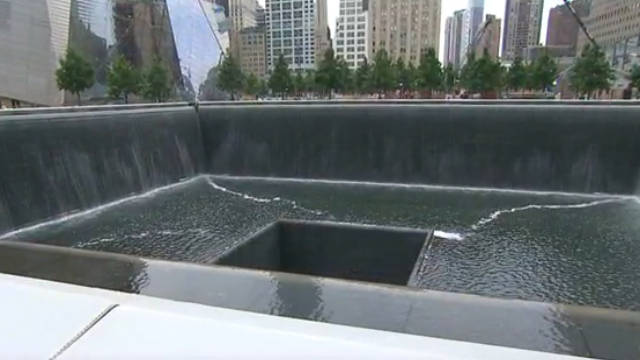
The people are gone. Reflecting Absence is the name of the U.S. 9/11 Memorial. We are left to reflect on those who no longer live. And we are left with sadness. Hilker observed that Americans have conveyed a visual representation marking the absence of those who have left us—especially under horrific conditions—Gettysburg, the U.S.S. Arizona Memorial at Pearl Harbor, Vietnam Veterans Memorial.
As Hilker wrote (p. 30),
The people are gone. Reflecting Absence is the name of the U.S. 9/11 Memorial. We are left to reflect on those who no longer live. And we are left with sadness. Hilker observed that Americans have conveyed a visual representation marking the absence of those who have left us—especially under horrific conditions—Gettysburg, the U.S.S. Arizona Memorial at Pearl Harbor, Vietnam Veterans Memorial.
As Hilker wrote (p. 30),
“Mourning is the human response to the absence of those lost.”
7. Memorials help
us live.
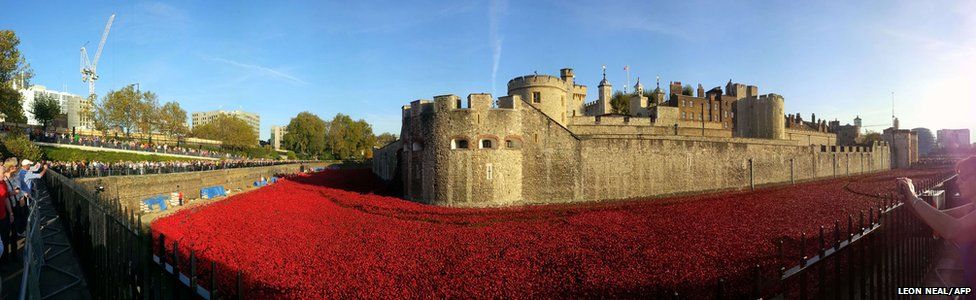
Death is always abstract for the living—especially the young who
have been protected from the face of death. As Hilker observes, memorials can
evoke melancholy and invite us to grieve. Throughout the year we see people
weep in response to news stories. If we have lost a loved one, we know their sadness. We feel their
pain. And perhaps in that process of honoring those past we gain a new sense of
the importance of life- our own life, our neighbors’ lives, and the lives of all
those with whom we identify—our country, our faith, our fellow human beings.
Each day we contribute to the narrative we leave
to help shape those who remember us.
REFERENCES
Ben-Amos, A. (2003). War commemoration and the formation
of Israeli national identity. Journal of
Political & Military Sociology, 31(2),
171-195.
Hilker, A. (2014). The comfort of melancholy:
Understanding the experience of absence at American memorials. Journal of American Culture, 37, 29-36.
doi:10.1111/jacc.12104
Johnston, R., & Ripmeester, M. (2009). Awake anon the
tales of valour: the career of a war memorial in St. Catharines, Ontario. Canadian Geographer, 53, 404-426.
doi:10.1111/j.1541-0064.2009.00261.x
Publications (many free downloads)
Connections
Publications (many free downloads)
Comments
Post a Comment